
Author: webadmin
Policy challenges in Germany and Poland: what can we learn from the SHARE data

The paper compares a set of health and labour market outcomes for three populations from the Survey of Health, Ageing and Retirement in Europe (SHARE). We analyse differences between the Polish aged 50+ and the respective German population divided into those who prior to the unification in 1989 lived in the East and West Germany. In terms of most analysed outcomes we find a \”West-East gradient\” with the most favourable statistics found for the west German population and the worst for Poland. The unfavourable situation on the labour market in Poland goes along poor health and lifestyle outcomes on most measures, and it seems that employment and health-related policies should be designed in combination to address the problems. The East–West divide in Germany still seems to present a policy challenge. We find important differences in such outcomes as labour market arrangements and such health outcomes as incidence of high blood pressure and diabetes. The East–West gradient is also found in the so-called underused capacity, i.e. the proportion of healthy individuals aged 50–65 who are not employed. The main factor behind this in Poland is retirement, while the difference in Germany is largely caused by higher levels of unemployment in the east.
CenEA’s 2011 Pre-election Report 2: Elections 2011: who will gain, who will lose and how much it will cost? (PL)

The second part of CenEA’s Pre-election Report 2011 presents detailed analysis of electoral declarations of most important parties taking part in the 2011 parliamentary elections in Poland. The Report assesses the overall cost of the proposed reforms and their distributional consequences.
Long shadows of history – persecution in Central Europe and its labor market consequences

We analyze the extent and effects of job-related persecution under communist regimes in the Czech Republic and Poland using a representative sample of individuals aged 50+ from the Survey of Health, Ageing and Retirement in Europe. Retrospective information collected in the SHARELIFE interview offers a unique chance to relate past and current labor market outcomes to experiences of persecution reflecting the historical developments in Central Europe in the 20th century. Individual level data with details on labor market histories is matched with information on the experiences of state oppression. On-the-job persecution is found to have significant effect on job quality assessment and is strongly related to reporting of distinct periods of stress in both countries. Consequences of on-the-job persecution seem to have been much more severe and longer lasting in the Czech Republic, with significant financial effects of job loss or discrimination. This is explained by the greater degree of state control over the labour market in the former Czechoslovakia compared to Poland and different characteristics of the dissident groups in both countries.
CenEA’s 2011 Pre-election Report 1: 2006-2011: who gained and who lost? (PL)

The first part of CenEA’s Pre-election Report 2011 presents analysis of the influence of changes in the tax and benefit system in Poland during the last two terms of Parliament (2005-2011). The analysis, based on the Polish Household Budgets’ Survey (2009) uses the microsimulation model SIMPL and shows detailed account of the changes in the tax and benefit system introduced over the last six years, their effect on the balance of public finance and the situation of households by income and demographic groups. The report assesses the influence of the reforms introduced in each of the two terms of Parliament and compares implemented policies with declarations from previous elections.
As part of the regular updates of the SIMPL model we have corrected an error in the income tax calculations, which affected the simulated results for the 2009 tax reform presented in Microsimulation Report 1/11. The updated and corrected calculations of the distributional effect of the 2006-2011 reforms have been presented in Microsimulation Report 1/12.
The effect of health and employment risks on precautionary savings

This paper extends the idea of using ex-ante risk measures in a model of precautionary savings by explicitly simulating future net-income risks. The uncertainty measure takes into account the interdependency of labour market and health status. The model is estimated for prime age males using the German Socio-Economic Panel Study for years 2001-2007. The empirical analysis is conducted using a measure for savings stocks and savings flows. The latter model allows to control for individual specific effects. We find evidence for precautionary savings in response to the uncertainty measures. The results are robust and stable across specifications. There is evidence for a share of precautionary wealth of about 14 to 17 percent.
Persecution in Central Europe and its consequences on the lives of SHARE respondents
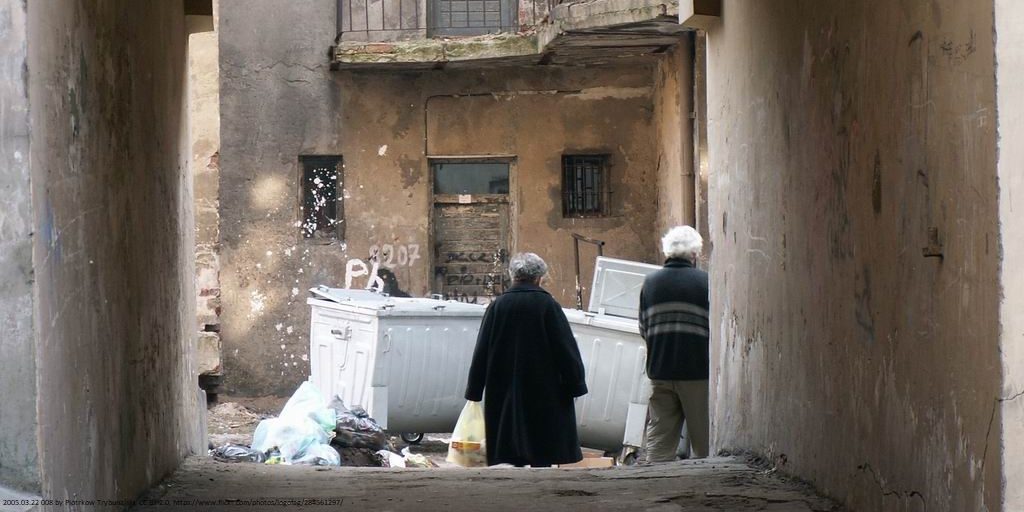
We report information from the SHARELIFE data recalling experiences of persecution and dispossession of SHARE respondents and focus on the relationship of persecution and current outcomes in the three Central European populations. 10% of the Czech and East German respondents and about 6% of those in Poland report being persecuted, and political reasons are most frequently reported to be the main reason for this persecution (respectively 61%, 47% and 40%). Persecution in the Czech Republic had most severe consequences for professional careers of the respondents. The experience of persecution in the Czech Republic has strongest effects on the reported satisfaction with job achievements and career disappointment. The relationship between persecution and health is strongest in Poland, where compared to those not persecuted in the past, the persecuted individuals are from 60-70% more likely to report current poor health, three or more limitations in performing daily activities (ADLs), as well as having experienced long-term illness and a period of disability. Persecuted individuals in Poland are also twice as likely to report having three or more symptoms of poor health. Effects of persecution on health are also present in the Czech and GDR samples, though in most cases the effects are not statistically significant.
Distributional effects of the Polish Child Tax Credit and its potential reforms.

The Polish Child Tax Credit (CTC) in operation today differs substantially in its generosity and distributional implications from the original policy proposals. While initially designed as an instrument to target low income working families, the credit was implemented as a tax credit without any upper earnings limit, and its generosity was substantially extended in autumn 2007 implying an annual cost of about 0.5% of the Polish GDP. The current design grants highest gains in absolute terms to families in the upper half of the income distribution, while proportionally gains are most significant for those in the middle of the distribution. Households with children in the bottom decile of the income distribution gain on average about 7.60PLN per month, and those in the top 40% of the distribution gain over a hundred zloty per month on average. The paper also considers effects of potential reforms of the CTC aimed at reducing its cost. The recently discussed eligibility limitation to families with three or more children, would reduce the cost of the policy by between 80% and 90%, while a simulated reduction of generosity of the credit by 50%, would save the government about 2.2bn PLN per year. The latter policy would leave the incomes of families with children in the bottom deciles largely unchanged, and it would reduce the benefits from the credit to households in the upper half of the income distribution by about 50% on average.
Poorer health – shorter hours? Health and flexibility of hours of work

We analyse the role of health in determining the difference between desired and actual hours of work in a sample of German men using the Socio-Economic Panel Data for years 1996-2007. The effects of both self-assessed health and legal disability status are examined. About 60% of employees report working more than they would wish with the mean difference of -3.9 hours/week. We estimate static and dynamic model specifications allowing for auto-regressive nature of the dependent variable and testing for the role of lagged health status. Important differences are found between east and west German Laender. In the west we confirm serial dependence in the disequilibrium and find statistically significant role of general health measures in determining the disequilibrium. Employees in bad health want to work on average by about 0.4 hour/week less according to the static specification, and by about 1 hour/week less if dynamics of health and of the disequilibrium are taken into account. This is respectively 10% and 25% of the mean difference. We find no effects of legal disability status on the disequilibrium which we interpret as a reflection of stronger legal position of disabled employees.
Dynamics of health and labour market risks

While there is little doubt that the probability of poor health increases with age, and that less healthy people face a more difficult situation on the labor market, the precise relationship between facing the risks of health deterioration and labor market instability is not well understood. Using 12 years of data from the German Socio-Economic Panel we study the nature of the relationship between poor health and non-employment on a sample of German men aged 30–59. We propose a joint model of health and labor market risks which identifies the mechanism through which poor health contributes to the probability of being jobless and vice versa. We find an important role of unobserved heterogeneity and evidence for correlation in the unobservable characteristics determining the two processes. The results also show strong persistence in the dynamics of health and labor market risks.
Altruism in the modern family: private transfers between parents and their biological and non-biological children

It has been recognized for a long time in the literature that there are altruistic relations within a family of parents and their biological children. The dispute on the sources of altruism refers usually to sociobiology and genetic improvement, even though there are also arguments for another mechanism in operation based rather upon social than biological relations. The changes in family formation, tenure and structure that took place over the previous century might have affected signicantly the relations within family. In addition to these processes Europe is facing opportunities and threats coming from ageing which makes mechanisms determining intergenerational interactions especially relevant. For these reasons the hypothesis on kinship altruism’s presence within families shall be investigated in more detail. We found evidence over the sample of 50+ population in Europe showing that there is no reason to believe that parents over 49 treat the biological childrenn in a different way than non-biological children as far as the intervivos transfers are concerned. However, children among which there is a non-biological one are less likely to provide financial and non-financial transfers to parents.