

Author: webadmin
Unemployment trap and family benefits in Poland (PL)

The Report presents analysis of the Polish family benefits system in the context of relation between the level of financial support for families with children and parental labor market incentives. We present the results of increase of income thresholds planned for November 2014 and analyse set of potential reforms in the family benefits system for the year 2015. In particular we are interested in reforms which give incentives to unemployed parents of children to start working. The analysis used the microsimulation model SIMPL based on the data from the Polish Household Budget Survey from year 2011.
Data and model cross-validation to improve accuracy of microsimulation results: estimates for the Polish Household Budget Survey

We conduct detailed analysis of the Polish Household Budget Survey data for the years 2006-2011 with the focus on its representativeness from the point of view of microsimulation analysis. We find important discrepancies between the data weighted with baseline grossing-up weights and official statistics from other sources. A number of re-weighting exercises is examined from the point of view of the accuracy of microsimulation results and we show that using a combination of demographic calibration targets with several economic status variables or tax identifiers from the microsimulation model substantially improves the correspondence of model results and administrative data. While demographic re-weighting is neutral from the point of view of income distribution, calibrating the grossing-up weights to adjust for economic status and tax identifiers significantly increases income inequality. We argue that although data re-weighting can substantially improve the accuracy of microsimulation it should be used with caution.
Stability of elasticity estimates in the context of significant changes in labour market incentives

Using unique developments on the Polish labour market between 2005 and 2009 we examine the stability of labour supply elasticities in conditions of rapidly changing fi nancial incentives to work. The estimated elasticities reflect substantial labour supply responsiveness in examined samples of Polish couples with total (net earnings) elasticities ranging from 0.2-0.5 for men and from 0.6-0.7 for women depending on the year of data and method of estimation. The analysis confi rms the importance of accounting for unobserved heterogeneity in the models, although this does not provide for greater stability of elasticity estimates. We use the estimated models to calculate the labour supply eff ect of tax and benefi t reforms implemented between 2005 and 2009 and compare these to actual changes in employment in Poland.
Increasing Resources for Families with Children Through the Tax System: Recent Reform Proposals from Poland

This brief discusses the consequences of a recent reform proposal that aims to redistribute resources to low-income families with children through the income tax system in Poland. The proposed reform replaces the current child tax credit with additional amounts of the universal tax credit, and by changing the sequence in which tax deductions are accounted for, it increases resources of low income families with children by about 1.7 billion PLN per year (0.4 billion EUR). The brief examines four possible ways of additional tax system modifications that would make the reform package neutral for the public finances, and presents distributional implications of the reforms.
Old-Age Poverty and Health – How Much Does Income Matter?
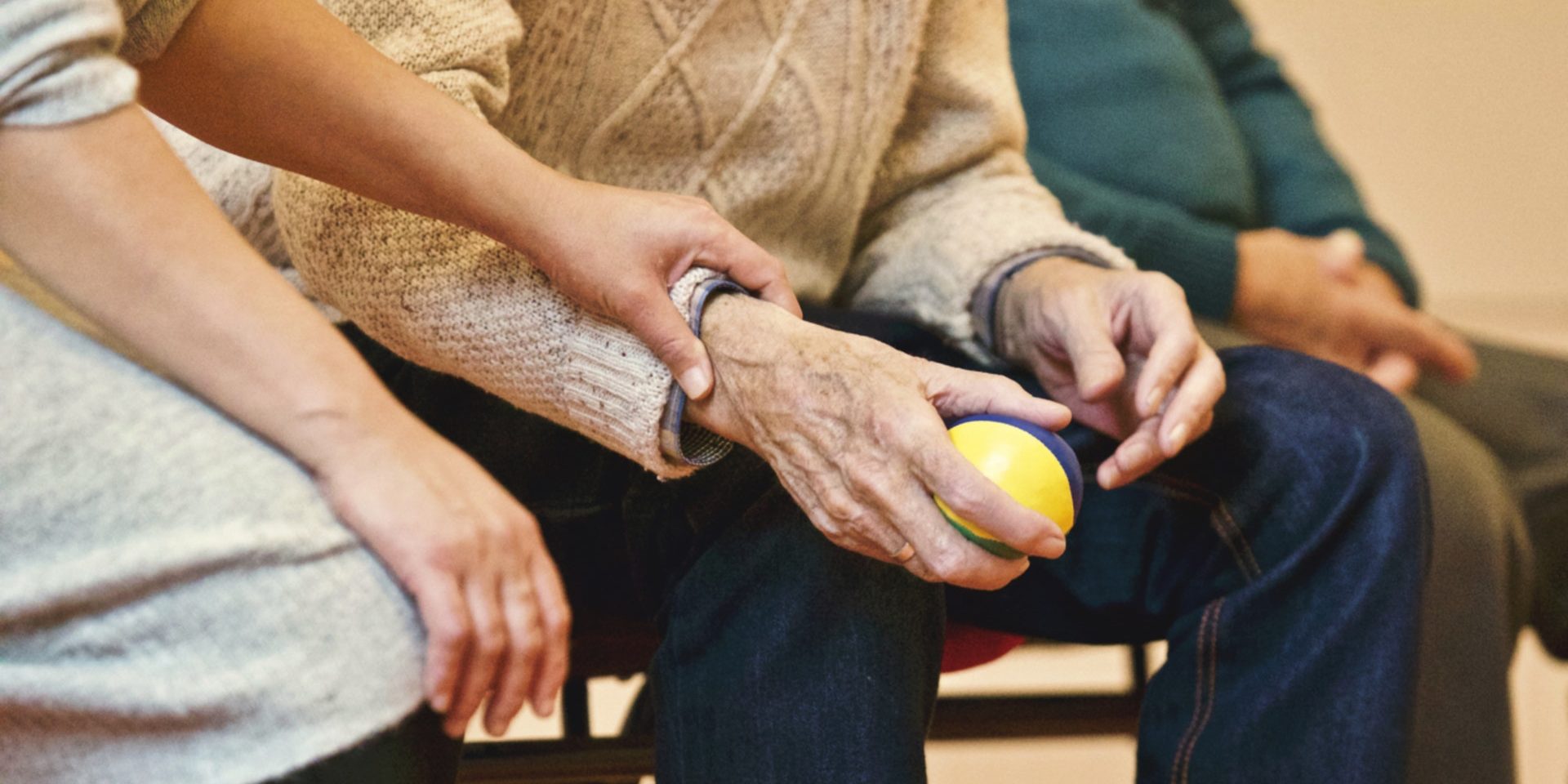
The question concerning the material situation of older people and its consequences for their wellbeing seems to be more important than ever. This is especially true given rapid demographic changes in the Western World and economic pressures on governments to reduce public spending. We use data from the Survey of Health, Ageing and Retirement in Europe (SHARE) to examine different aspects of old-age poverty and its possible effects on deterioration in health. The data contains information on representative samples from 12 European countries including the Czech Republic and Poland. We use the longitudinal dimension of the data to go beyond cross sectional associations and analyze transitions in health status controlling for health in the initial period and material conditions. We find that poverty matters for health outcomes in later life. Wealth-defined and subjective poverty correlates much more strongly with health outcomes than income-defined measure. Importantly subjective poverty significantly increases mortality by 58.3% for those aged 50–64 (for details see Adena and Myck, 2013a and 2013b).
Prezydencka propozycja modyfikacji wsparcia rodzin w ramach systemu podatkowego

W Komentarzu przedstawiono analizy wpływu modyfikacji systemu podatkowego zaproponowanych w ramach prezydenckiego projektu polityki rodzinnej. Proponowana przez Prezydenta RP zmiana polega na zastąpieniu ulgi na dzieci przez system wielokrotnoœci kwoty wolnej od podatku zależnej od liczby dzieci w rodzinie. Komentarz przedstawia analizê systemu zestawiającego rozszerzenie preferencji podatkowych uzyskiwanych przez rodziny z dziećmi z jednoczesnym ograniczeniem korzyści podatkowych przysługujących w obecnym systemie małżeństwom nieposiadającym dzieci w postaci mo¿liwoœci wspólnego rozliczenia.
Poverty and transitions in health

Using a sample of Europeans aged 50+ from twelve countries in the Survey of Health, Ageing and Retirement in Europe (SHARE) we analyse the role of poor material conditions as a determinant of changes in health over a four-year period. We find that poverty defined with respect to relative incomes has no effect on changes in health. However, broader measures of poor material conditions such as subjective poverty or low relative value of wealth significantly increase the probability of transition to poor health among the healthy and reduce the chance of recovery from poor health over the time interval analysed. In addition to this the subjective measure of poverty has a significant effect on mortality, increasing it by 40.3% among men and by 58.3% among those aged 50–64. Material conditions matter for health among older people. We suggest that if monitoring of poverty in old age and corresponding policy targets are to focus on the relevant measures, they should take into account broader definitions of poverty than those based only on relative incomes.
Financial support for families with children in Poland: examples of modifications in the tax system (PL)

The Report presents the effect of modifying the Polish tax system, on the one hand, using the approach taken to supporting families with children in France, and on the other by making the universal tax allowance dependent on the number of children. We also present the consequences of shifting tax preferenes towards families with children in the form of limitations on joint taxation for married couples and other alternative changes in the tax system.
Appendix A contains simulation extensions demonstrating the possibility of including a form of the child tax credit in agricultural tax.
Financial support for families with children in Poland in 2013 (PL)

The Report presents analysis of the most important elements of financial support for families with children in Poland in 2013: family benefits and tax preferences available for parents. We analyse values of support for specific stylised families and using data from the Polish Household Budget Survey from 2010. The analysis uses the SIMPL microsimulation model.
Financial incentives to work in the context of a complex reform package and growing wages: the Polish experience 2005-2011

We examine the consequences of a tax and benefit reform package on work incentives as implied by changes in tax and replacement rates. For this purpose we focus on policy reforms implemented in Poland between 2005 and 2011 which included a number of significant changes in the tax and benefit system. While marginal and participation tax rates in the majority of analyzed cases fall as a result of the reforms, the conclusions from looking at replacement rates for the population eligible for means tested benefits are generally different. These suggest that despite significant tax giveaways incentives on the labor market weakened as a result of the reform package for families with children and for those eligible to safety net benefits. For the majority of analyzed scenarios work incentives improved over the years despite the negative effect of the reforms only due to significant real wage growth. For a significant number of analyzed cases we find conflicting conclusions on the effect of reforms on financial incentives to work using the PTRs and RRs. Given the different nature of these measures this is not necessarily surprising, but serves as a note of caution on the use of each of them independently, in particular with reference to complex reform packages.