
Author: webadmin
Lights along the frontier: convergence of economic activity in the proximity of the Polish-German border, 1992-2012

This paper studies regional economic development on the municipality-level in Poland and Germany along the Oder-Neisse border. We use high-quality satellite night-time light intensity data as an innovative, comparable and reliable measure to proxy for economic activity on both sides of the border consistently over a long period of time (1992-2012). We use descriptive heat maps as well as regression analysis to investigate two aspects: first, how far is the economic convergence across and within municipalities along the Polish-German border? Second, what effect does the distance to the border have on economic activity as measured with light emissions? Our findings suggest that – somewhat surprisingly – convergence across the border has been almost complete. Polish towns that used to be economically much weaker have caught up with German towns. Also, we show that the patterns of economic activity related to distance vary greatly for Germany and Poland.
Meetings and exchanges to support collaboration in research

Since 2012 CenEA has the privilege to organise the Keynote Lecture Series in Honour of Leonid Hurwicz. Past speakers in this series included: prof. Richard Blundell, prof. Andrew Chesher, prof. David Figlio, prof. John van Reenen, prof. James Heckman, prof. Rachel Griffith and prof. Orazio Attanasio. The Hurwicz Lecture in 2019 will be delivered by prof. Jörn-Steffen Pischke (London School of Economics and Centre for Economic Performance)
Beginning in 2014, the lectures are delivered as part of the annual Ce^2 Workshop organised jointly with the Centre for Microdata Methods and Practise (CeMMAP). This international two-day workshop focuses on microeconomic theory and applications and provides a forum for senior researchers and PhD students to present and discuss their research.
CenEA also cooperates with the Faculty of Economic Sciences at the University of Warsaw in the organisation of the Warsaw International Economic Meeting (WIEM), which usually follows the Ce^2 Workshop and opens with the Hurwicz Lecture.
On top of this we organise other academic conferences and workshops and actively promote our research through participation in the FREE Network events and other national and international conferences.
Data analysis to support effective evidence-based public policy
We apply the latest academic methods and tools to improve the understanding of consequences of different policy decisions and disseminate our findings broadly through the press and media.
Using our microsimulation model SIMPL, CenEA regularly publishes reports and commentaries on the implications of introduced or hypothetical tax and benefits reforms. These reports include our tax and benefit pre-election analysis, published prior to parliamentary elections in Poland and covering the evaluation of the consequences of different political party manifestos. We are also active in the development of the international microsimulation model EUROMOD and in the dissemination of research conducted using EUROMOD.
Taking advantage of data on population ageing from the Survey of Health, Ageing and Retirement in Europe (SHARE) we have published reports on the implications of demographic dynamics in Poland and other countries with regard to health developments, long-term care, poverty and labour market activity.
For policy-related online publications by CenEA researchers please consult:
- Policy briefs/papers (in English)
- Komentarze CenEA (CenEA Commentaries in Polish)
- Other publications (in either English or Polish): working papers, research notes, microsimulation reports
Academic rigour to improve our understanding of social phenomena
We apply the highest academic standards to address the most important questions in the area of socio-economic development. Results of our work have been published in international academic journals including: American Economic Journal – Economic Policy, Social Science and Medicine, Labour Economics, Economics of Transition, Journal of Health and Ageing, Review of Economics of the Household, and many others.
CenEA has been involved in international research projects including the Survey of Health, Ageing and Retirement in Europe (SHARE) and the European tax and benefit microsimulation model EUROMOD, and we regularly conduct research funded by the Polish National Science Centre (NCN).
CenEA is a member of the Forum for Research on Eastern Europe and Emerging Economies (FREE Network) and cooperates with a wide network of international researchers. Our research is widely disseminated on a national and international scale.
Here you can find a list of selected journal articles by CenEA researchers.
News: 2019 edition of the (Ce)2 Workshop and Hurwicz Lecture

The sixth edition of the (Ce)2 workshop organised by CenEA in cooperation with CeMMAP will take place in Warsaw on 1-2 July 2019. Prof. Jörn-Steffen Pischke will give the 2019 Hurwicz Lecture.
The submission process for the 2019 (Ce)2 workshop in microeconomic theory and applications organised by CenEA in cooperation with CeMMAP is open until 5 April 2019. Call for papers and more information on the workshop can be found here. The workshop will take place in Warsaw between 1-2 July 2019.
We are very proud to announce that the 2019 keynote address in the Lecture Series in Honour of Leonid Hurwicz will be given by prof. Jörn-Steffen Pischke (London School of Economics and Centre for Economic Performance). For more information on previous addresses see the Hurwicz Lecture Series page.
As in preceding years the keynote lecture will overlap with the 2019 edition of the Warsaw International Economic Meeting (WIEM).
Pakiet podatkowo-świadczeniowych rozwiązań rządu Zjednoczonej Prawicy

Jeśli zgodnie z planem rządu od lipca 2019 r. w życie wejdzie upowszechnienie świadczenia wychowawczego 500+, to reformy podatkowo-świadczeniowe skierowane do rodzin z dziećmi wprowadzone w obecnej kadencji Sejmu zwiększą zakres finansowego wsparcia rodzin o 39,6 mld zł rocznie. Wsparcie rodzin z dziećmi to najistotniejszy element pakietu rozwiązań podatkowoświadczeniowych analizowanego w najnowszym Raporcie Centrum Analiz Ekonomicznych CenEA, z którego wynika, że po uwzględnieniu wszystkich długoterminowych rozwiązań przyjętych podczas VIII kadencji Sejmu gospodarstwa domowe zyskują 32,7 mld zł rocznie.
Szczegóły analiz można znaleźć również w Informacji prasowej Finansowe wsparcie rodzin z dziećmi wyższe o 40 mld zł rocznie po VIII kadencji Sejmu.
Fundacja CenEA
dr hab. Michał Myck
mmyck@cenea.org.pl tel. +48 91 831 40 29
Policy in the Pipeline: Identifying Regional Public Investment Priorities Using a Natural Experiment

We identify regional public investment priorities by studying the development of the water pipe system in the largest district in Poland. For this purpose, we take advantage of a major administrative reform, implemented on 1 January 1999, which substantially changed the structure of Polish local government and reduced the number of top-tier administrative regions from 49 to 16. We treat the reform as a natural experiment, and apply the difference-in-differences approach to study developments along the boundary of the new Mazovian voivodeship. We find strong and positive implications for the development of the water pipe system in municipalities within the Mazovian voivodeship compared with those just outside its boundaries. The overall post-reform difference in the length of the total water pipe network is 25% and the difference in the per-capita length of the network is 30%. Local public investment priorities at the voivodeship level, potentially related to effective use of EU funds, are the most likely determinants of these differences.
Implications of Social and Material Deprivation for Changes in Health of Older People

Objective: We use the panel structure of the Survey of Health, Ageing and Retirement in Europe (SHARE) data for 14 countries to examine the implications of material and social deprivation for health deterioration in old age and mortality. Method: To minimize the potential endogeneity bias, we examine the relationship between deprivation and changes in health rather than levels of health. We include a substantial set of fixed “initial conditions,” and extend the controls with health measures, as observed at the initial period. Results: The results of the probit regression suggest a strong and statistically significant relationship between measures of material and social deprivation and changes in physical and mental health. Mortality is only affected by the social dimension of deprivation. Discussion: Treating material and social deprivation separately rather than as a single social exclusion indicator allows for more specific identification of the role of the two dimensions, which might be important for policy decisions.
“Reference: Myck M, Najsztub M, Oczkowska M. (2020) Implications of Social and Material Deprivation for Changes in Health of Older People. J Aging Health 32(5-6):371‐383. doi:10.1177/0898264319826417“
Implications of the Polish 1999 administrative reform for regional socio-economic development
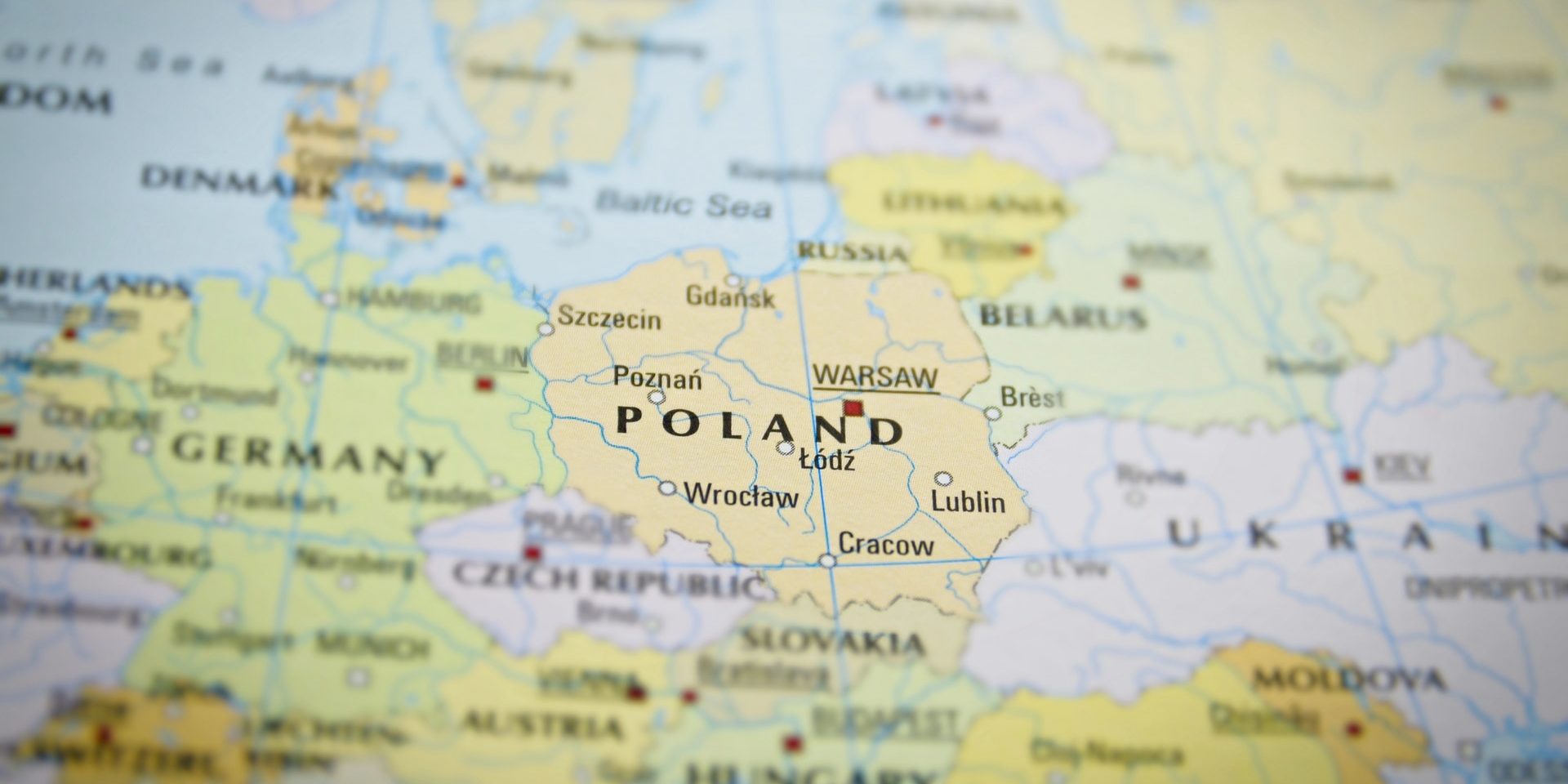
On 1 January 1999, four major reforms took effect in Poland in the areas of health, education, pensions and local administration. After 20 years, only in the last case does the original structural design remain essentially unchanged. In this paper, we examine the implications of this reform from the perspective of the distance of municipalities from their regional administrative capital. We show that despite fears of negative consequences for peripheral regions, the reform did not result in slower socio-economic development for those municipalities that found themselves further from the new administrative centres. We use a number of socio-economic indicators at municipal level and apply differences-in-differences methods comparing the outcomes before and after the reform between the municipalities for which the distance increased and those for which it did not. Municipalities are matched on pre-reform indicators using entropy balancing. Apart from small effects on net migration, we do not identify any significant negative effects of the 1999 administrative reform for the peripheral municipalities. In fact, results are positive in the case of municipal revenues and, while they are not precisely estimated in our preferred specification, they remain statistically significant in a number of robustness checks.
Paid Work after Retirement – Does Quality of Your Main Job in the Past Matter?

In this brief, we summarize the results of a recent analysis focused on identifying the key determinants of engagement in paid work after retirement based on life histories data from the Survey of Health, Ageing and Retirement in Europe (SHARE). We find a strong link between the probability of work after retirement and indicators of quality of work prior to labor market exit, such as high physical and psychosocial demands, lack of control or receiving adequate social support. These results suggest a potentially important role of job-quality regulations. We find no significant association with past experience of adequate rewards with respect to efforts in the main job, which suggests that involvement in paid work after retirement may to a lesser extent be driven by financial concerns. This might mean that policy initiatives targeted at higher level of labor market activity among retirees should stress non-material aspects of employment in later life.