

Autor: webadmin
Portfele gospodarstw domowych po exposé premier Beaty Szydło

Examining Social Exclusion among the 50+ in Europe – Evidence from the Fifth Wave of the SHARE Survey

Though intuitive, the concept of social exclusion is complex and hard to measure. Recently, however, we have witnessed policymakers and international institutions increasingly pay attention to better understand material and social distress and to identify the means to improve a broadly defined standard of living. In this brief, we summarize some of the results and conclusions from a recently published First Results Book based on the latest data from the Survey of Health, Ageing and Retirement in Europe (SHARE). We discuss the approach adopted to measure material and social deprivation, and the subsequent identification of risk of social exclusion. We show that Europeans increasingly value the quality of their social life as they grow older and that factors, such as worsening health, unmet long-term care needs, loneliness or lack of social cohesion are important determinants of social exclusion among the 50+ population. If socio-economic policies are to respond effectively to the needs of older Europeans, then broader aspects of their lives need to be taken into account and public policy should go beyond simple targets of income-defined poverty.
Programy wyborcze 2015: kto zyska, kto straci i ile to będzie kosztowało
Zagadnienia metodologiczne oraz pomocnicze tabele i wykresy do Raportu zamieszczono w Załączniku.
Dane do wykresów z Raportu.
Prezentacja przedstawiona podczas konferencji prasowej podsumowuje najważniejsze wyniki przedstawione w Raporcie.
Dwie kadencje w polityce podatkowoświadczeniowej: programy wyborcze i ich realizacja w latach 2007-2015
Progi dochodowe dla poszczególnych rodzajów gospodarstw domowych wykorzystane w Raporcie można znaleźć w Tabeli Z6 w Załączniku.
Dane do wykresów z Raportu.
Prezentacja przedstawiona podczas konferencji prasowej dotyczy metody mikrosymulacji wykorzystanej do przygotowania Raportu oraz podsumowuje jego wyniki.
Przedwyborcze pięć miliardów: jak je wydać i skąd je wziąć
Zagadnienia metodologiczne zamieszczono w Załączniku.
Przedwyborcze miliardy: jak je wydać i skąd je wziąć
Distribution of the VAT Burden in Poland by Income Group and Demographic Characteristics

The Value Added Tax (VAT) is the main source of revenue for the public budget in Poland. Though issues regarding VAT rates or tax settlement mechanisms are brought into the public debate in Poland on a regular basis, little is still known on the distribution of the VAT burden among Polish households. In this brief, we analyze the VAT relation to household income, consumption and demographic structure in Poland. We find that the VAT burden is inversely related to income, with the bottom ten percent of the population paying on average 16.3% of their income in VAT and the top income group paying only 6.8%. Larger households, such as those with children, pay about 11%-15% more VAT due to higher spending. However, as a result of different spending structures, the additional VAT burden of families with children is independent of the number of children and only marginally dependent on their age. These differences in the tax burden should be taken into consideration in the current debate on the possibility of unifying the VAT rates in Poland.
Taxes and Benefits in the Polish Parliamentary Election Campaigns

The upcoming parliamentary elections in Poland, scheduled for the 25th of October 2015, have on the one hand stimulated debate on the record of the current coalition government, and on the other opened the debate on the nature of socio-economic policy to be conducted in the coming years. In this brief, we draw on two recent pre-election reports published by the Centre for Economic Analysis, CenEA. We discuss developments in tax and benefit policies under the coalition of the Civic Platform and the Polish People’s Party over the last eight years, as well as the pre-election pledges regarding tax and benefit policies to be implemented after the elections. We show a significant shift in policy priorities with respect to the distributional effect of the tax-benefit policies between the first (2007- 2011) and the second (2011-2015) term in office, towards more support for low-income families. We also argue that, judging by the presented electoral pledges, Polish voters face a difficult choice between the promises of the opposition parties, which seem too costly to be realistic, and an enigmatic tax overhaul reform proposed by the governing Civic Platform, which is supposed to substantially benefit nearly all working households at a low cost for the state budget, with details of the reform design, however, kept away from public scrutiny.
How History Matters for Student Performance. Lessons from the Partitions of Poland

This paper examines the effect on current student performance of the 19th century Partitions of Poland among Austria, Prussia and Russia. Despite the modern similarities of the three regions, using a regression discontinuity design I show that student test scores are 0.6 standard deviation higher on the Austrian side of the former Austrian-Russian border. This magnitude is comparable to the black vs. white test score gap in the US. On the other hand, I do not find evidence for differences on the Prussian-Russian border. Using a theoretical model and indirect evidence I argue that the Partitions have persisted through their impact on social norms toward local schools. Nevertheless, the persistent effect of Austria is puzzling given the historical similarities of the Austrian and Prussian educational systems. I argue that the differential legacy of Austria and Prussia originates from the Austrian Empire’s policy to promote Polish identity in schools and the Prussian Empire’s efforts to Germanize the Poles through education.
Living longer, working longer: the need for a comprehensive approach to labour market reform in response to demographic changes
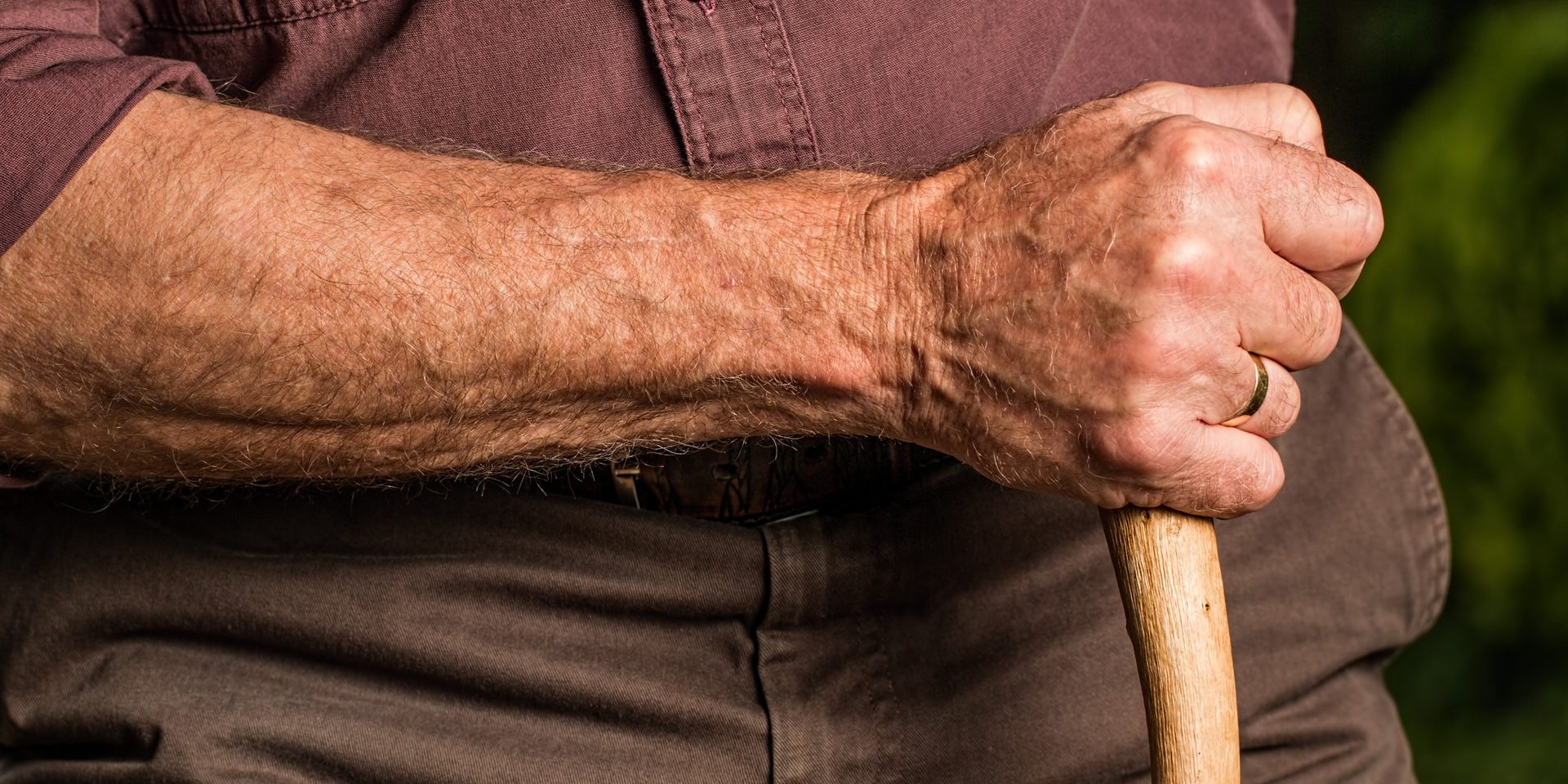
Increases in life expectancy over the last decades have been among the most salient reflections of changes in the quality of life in the developed world. In Germany, in 1990, the average life expectancy for men and women was, respectively, 72 and 79, while in Italy men could expect to live 74 years and women 80. By 2012, these numbers changed by about 6 years for men and 4 years for women in Germany and by 6 and 5 years in Italy. Substantial increases in life expectancy have been recorded in all EU countries, from Portugal to Estonia and from Cyprus to Norway. This growth reflects unequivocal success of medicine and health care provision and fundamental changes in the quality of life and lifestyle, and offers new opportunities for the growing groups of older populations.